Mediterranean Kitchen Ideas: How to Create a Warm, Timeless Space
A Mediterranean kitchen is warm, welcoming and effortlessly timeless. Inspired by sun-filled homes across Greece, Italy and the Mediterranean coast, this style combines natural materials, soft earthy colors and simple decorative details to create a space that feels both elegant and relaxed.
You don’t need a traditional Mediterranean home to achieve the look. Natural wood, warm stone, handcrafted ceramics, soft textiles and carefully chosen artwork can bring Mediterranean character to even a modern kitchen.
Here are some simple Mediterranean kitchen ideas to help you create a warm and inviting space.
1. Start Mediterranean Kitchen Ideas with a Warm Color Palette
Warm whites, creamy beige, soft sand and natural stone tones create an ideal foundation for a Mediterranean kitchen.
Instead of cool whites and greys, choose colors with warm undertones that reflect sun-washed walls, limestone and sandy coastal landscapes. These softer shades make the room feel welcoming while allowing natural wood and decorative details to stand out.
Muted olive green, dusty blue or subtle terracotta can then be introduced in small amounts through ceramics, textiles or accessories.

2. Bring Warmth with Natural Wood
Natural wood is one of the easiest ways to introduce warmth and character into a Mediterranean-inspired kitchen.
Wooden cabinetry, open shelves, stools or a rustic kitchen island can soften a neutral interior and create a more relaxed atmosphere. Light and medium wood tones work especially well with cream walls, natural stone and warm white finishes.
The wood does not need to match perfectly throughout the room. Slight variations in tone often make Mediterranean interiors feel more natural and collected over time.
3. Use Stone and Natural Materials
Mediterranean interiors are closely connected to natural materials.
Stone countertops, marble, limestone, terracotta and textured plaster can introduce subtle variations in color and texture without making the kitchen feel overly decorated.
Even when renovating is not an option, smaller details such as wooden serving boards, stone bowls and ceramic accessories can create a similar effect.
The goal is to combine materials that feel tactile, natural and slightly imperfect rather than overly polished.
4. Decorate with Mediterranean Ceramics
Handcrafted-looking ceramics are perfect for bringing Mediterranean character into the kitchen.
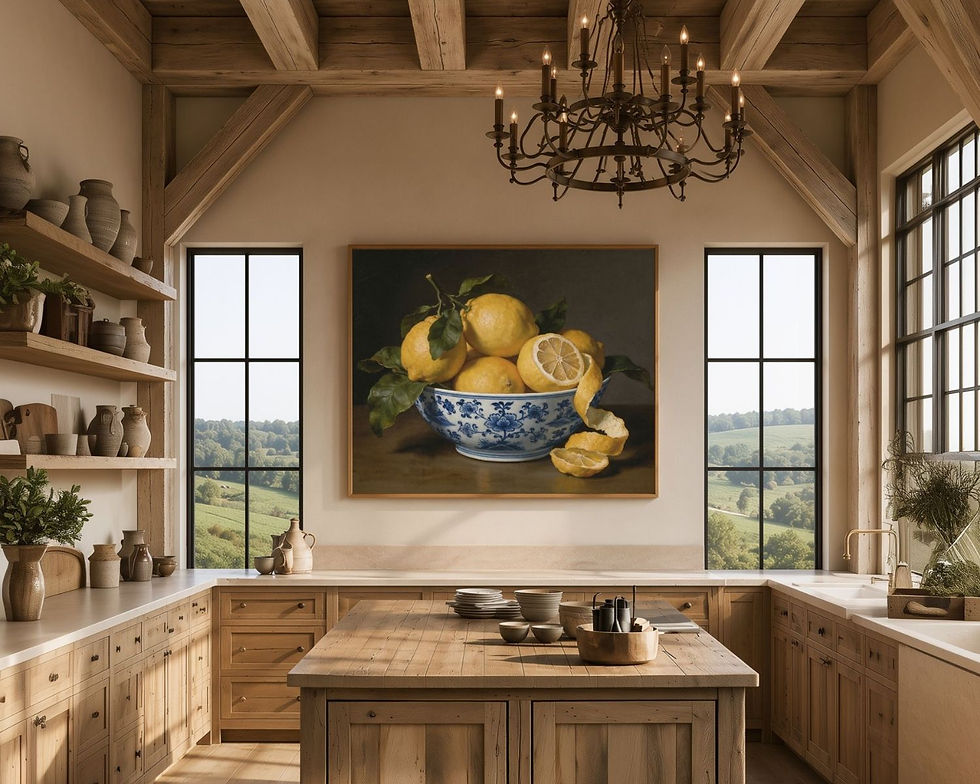
Simple bowls, pitchers, serving dishes and pottery can be both practical and decorative. Display a few favorite pieces on open shelves or place a beautiful ceramic bowl filled with lemons, figs or pomegranates on a kitchen island.
Blue-and-white ceramics can introduce a subtle coastal influence, while cream, earthy brown and softly aged finishes create a warmer rustic look.

5. Add Linen and Woven Textures
Natural textiles help soften the harder surfaces found in kitchens.
Linen or cotton kitchen towels, relaxed table runners and simple fabric napkins can introduce texture without adding visual clutter. Choose warm ivory, oatmeal, beige or muted coastal shades rather than bright colors.
Woven baskets are another easy addition. They can be used for bread, fruit or storage while adding a natural handcrafted quality to the room.

6. Let Mediterranean Wall Art Become a Focal Point
Artwork is an easy way to introduce Mediterranean atmosphere without changing the kitchen itself.
A traditional still life, olive tree landscape, architectural scene or peaceful coastal view can bring warmth and personality to a neutral kitchen.
For kitchens with natural wood and warm stone, artwork featuring lemons, pomegranates, olive branches or Mediterranean landscapes can work especially beautifully.
Rather than filling every wall, consider one carefully chosen artwork that creates a strong but elegant focal point.
7. Introduce Mediterranean Architecture Through Decorative Details
Arches, stone passageways and softly textured walls are characteristic elements of Mediterranean architecture, but you don't need to remodel your kitchen to introduce their atmosphere.
Architectural artwork can create a similar sense of place. A sunlit arch, quiet courtyard or weathered Mediterranean doorway can add depth to a simple kitchen and create the feeling of looking into another space.
Curved accessories, rounded pottery and softly shaped pendant lights can also echo the architectural forms commonly found in Mediterranean interiors.

8. Bring Nature into the Kitchen
Mediterranean homes often feel closely connected to the landscape.
Olive branches, fresh herbs, small citrus trees or simple greenery can immediately make a kitchen feel more relaxed and natural.
A large olive branch in a rustic ceramic vase can create a beautiful focal point, while smaller pots of rosemary, basil or thyme can add greenery without taking up much space.
Keep the arrangement simple. One or two natural elements usually have more impact than many small decorative pieces.
9. Choose Warm, Relaxed Lighting
Lighting can completely change the atmosphere of a kitchen.
Pendant lights above an island or dining table can add both function and character. Materials such as aged brass, woven fibers, ceramic and natural wood complement Mediterranean interiors particularly well.
During the day, allow as much natural light into the room as possible. In the evening, warm lighting helps enhance the natural tones of wood, stone and ceramics.
The result should feel welcoming rather than overly bright or formal.
10. Keep the Styling Simple and Collected
Mediterranean style does not require filling every surface with decorative objects.
A few carefully chosen pieces — a ceramic vase, wooden board, bowl of fruit, woven basket or favorite artwork — can create much more atmosphere than a large collection of accessories.
Leave some open space on countertops and shelves so that natural materials and individual objects have room to stand out.
The most inviting Mediterranean kitchens often feel as though they have evolved naturally over time rather than being perfectly styled all at once.
Create Your Own Mediterranean Kitchen
Mediterranean kitchen design is ultimately about creating a space that feels warm, natural and welcoming.
Warm neutrals, natural wood, stone, ceramics, relaxed textiles and carefully chosen artwork can transform the atmosphere of a kitchen without requiring a complete renovation.
Whether your home leans rustic, coastal or contemporary, these Mediterranean kitchen ideas can help you create a timeless space inspired by the relaxed beauty of Mediterranean living.


